Tuesday, March 5, 2013

Meanwhile, back at the book...

Part I: The Problem of Faith in the Modern World (cont.)

The Role of Science in Western Culture

The ultimate irony of the debate between science and faith is that the argument is already over, and science has won. The scientific worldview has conquered all others, at least in America and the more modern parts of the world. It’s everywhere, influencing practically everything we do. Seriously. Planning a party? Do you ask your pastor to say a prayer to beg God not to rain on your event? Or instead do you check your favorite weather report to find out what the odds of fair weather are for your special day? The fact that the second approach is the only one just about any of us would seriously consider shows how much of what we believe is based on science, not on religion. We no longer believe that weather is caused by the whim of a fickle God who can be coaxed to do what we want, but rather that it is the result of natural forces that scientists can measure and predict the effects of. Even the most religious among us watch the weather report to plan our day, not to laugh at how impertinent it is.
Or think of what we do when someone we love is critically injured. If we’re not Christian Scientists, we call 911 or rush them to the hospital, then we might pray for God to get involved, often asking him to help the doctors and nurses practice their science well. In a way, we’ve managed to demote God to the role of physician’s assistant.
 Every day, we do things that people a few generations ago would have thought impossible, mainly because science has shown that it can be done. We climb aboard an airplane and, despite its great weight, we trust that it will lift off and fly us to where we’re going. We watch events happening on the other side of the planet, probably unaware that the picture is being carried by satellites and lasers over glass “wires.” We point our phones at an interesting scene, record a video, and then send it to five friends around the country. Each of these activities began with scientific theory that was confirmed by experiments and then applied to technology. The only way this technology is possible is because of how well the scientific process has been able to give us a deeper understanding of how our world works.
Although we are not aware of it—and in fact, we probably would deny it—we in the Western world have come to believe more firmly in Isaac Newton than in God. We go about our days assuming that the physical rules that Newton discovered control how the world around us will behave, in part because those rules have been declared to be laws that seem to be more reliable than any of God’s moral laws. We understand that things fall when we let go of them, not just out of habit or because of supernatural forces pulling them down, but because they are obeying a law of gravitation that Newton said controls the whole universe. When we feel how hard it is to move something heavy, we know that Newton’s law of momentum explains why it’s so difficult, not that the darn thing is just being stubborn. Even though we may be only vaguely aware of how Newton’s ideas came to be accepted as laws (by first being worked out as mathematical formulas that were then verified by countless experiments), we have come to accept their authority without quibble. On the other hand, when someone is caught doing something bad, even something truly evil, the best we can do is pray that justice will be done, and usually we assume that it is up to us as a society to make sure that it is.
The place that Newton holds in our culture is mainly because he stood at the beginning of the scientific revolution that came to define how we look at the world. Newton’s theories were among the first to be systematically tested, both by analyzing the math behind them and through scientific experimentation. This turned into a virtuous cycle of sorts, where the truth of Newton’s groundbreaking insights was ever more firmly supported and the process of scientific experimentation itself came to be increasingly accepted as the most reliable way of revealing the truth. What happened as a result was the birth of the Enlightenment, when Western society turned away forever from blind obedience to authority and turned instead to the scientific method as the most trusted path to knowledge. In the Christian world, even the Bible became the subject of scientific study by scholars, scholars who often reached conclusions that disturbed the faithful and sparked a backlash against using science to study things that should be kept securely within church walls.
In spite of this limited backlash, though, even the most religious people in America accept the basic validity of the methods and assumptions of scientists. Yes, some people are offended by certain scientific theories because those theories seem to deny something that they believe God revealed through the Bible—in effect, calling God a liar—and yet those same people will often try to use other scientific theories to disprove the ones they disagree with. For example, fundamentalist Christians who think that Darwin’s theory of evolution contradicts the story of the creation of life in the book of Genesis will often claim that Newton’s laws of entropy prove that evolution is impossible. After all, they say, Newton’s laws say that everything is moving from order to disorder, so evolution must be impossible because the new life forms that supposedly result from evolution are usually more complex than the ones that came before. These “proofs” rarely stand up to close examination, though, because they almost always twist these laws or just flat out apply them wrongly. Even so, the fact that fundamentalists attempt to use science to discredit science shows how much the scientific point of view is actually accepted by people who, if asked, would heatedly deny that their worldview depends more on science than on revelation.

Thursday, February 21, 2013

We interrupt this book for a thought about dying

Tonight on NPR's Fresh Air, I heard an interview with Dr. Sam Parnia, a critical care doctor who is the director of resuscitation research at the Stony Brook University School of Medicine. He has written a book, Erasing Death, that talks about his research into optimal cardiac arrest care and the experiences that a small number of people experience after undergoing full cardiac arrest, experiences that Dr. Parnia prefers to call after death experiences, not near death experiences because, as he points out, the people who have those experiences are clinically dead. (Which implies that he doesn't view resuscitation as snatching the patient from the jaws of death so much as an actual resurrection.)

One of the things that struck me was the following statement:
And so what our discoveries have started to do is to question the way we consider the relationship between the human mind, what is classically been called the psyche or the soul, and the brain itself. And it may be that the human mind, consciousness or soul may be able to function when there is no brain function at all.
Classical science has clung fiercely to the Aristotelian view that consciousness is a byproduct of biological functioning. One way of interpreting much of the weirdness of quantum mechanics, however, suggests that there is something about consciousness that is not confined to the material realm. It's interesting to see that  mainstream medical scientists, following completely different paths, are reaching the same conclusion.

If you're interested in hearing more from Dr. Parnia, you can find the interview and information about his book at the NPR web site.

Tuesday, February 19, 2013


Part I: The Problem of Faith in the Modern World

Culture Wars: Faith vs. Reason

About 45 years ago, a Time magazine cover asked, “Is God Dead?” More recently, a report delivered to a meeting of the American Physical Society meeting in Dallas, no less, declared that an analysis of census information in nine countries indicated that religion would soon be “extinct” in those locations.
Faith in God is at an all-time low, especially in places that are actually part of the modern world, like Western Europe. Polls show that only a small fraction of people in Western Europe believe in God, and the same is true in places like Japan, where the religious traditions never were very strong on belief in a Supreme Being in the first place.
Wherever you look, the people who have the highest education are the least likely to believe in God, and those who have little or no formal education have the greatest faith in God. It would appear that the more you know, the harder it is for you to see how God can exist. Or to put it another way, it seems that faith and ignorance go together like a horse and carriage and are just as unfashionable.
Americans don’t fit this trend, however. Although the average American has a higher level of education than in most countries, more of us believe in God than people living in places just about anywhere except predominantly Muslim countries. But in America, even though just about everyone says that they believe in God, our faith is pretty shallow. Overall, the number of Americans who attend church regularly is lower now than just about any time in the last century, and when they are asked by pollsters, twice as many people claim to attend church regularly than actually do. Even before the twentieth century, church attendance was really quite low, even though most Americans think that our forefathers and foremothers were an especially pious bunch.
Today, our personal piety is also pretty thin. Despite all the arguments about prayer in schools and other civic places, few Americans actually pray every day, at least not very earnestly. (Sorry, but I don’t think “God is great, God is good…” or “Now I lay me down to sleep…” represents heartfelt piety.) A lot of Americans say that they think the Ten Commandments should be posted on courthouse lawns and in public schoolrooms, but if asked, disturbingly few of those same Americans would be able to name more than four or five easy ones, such as thou shalt not kill, steal, or commit adultery. Most of those same Americans would be upset to see the return of the so-called blue laws that kept stores closed on Sundays a few decades ago and would think them a violation of their God-given right to sell and shop whenever they want. Anymore, even the most hard-nosed fundamentalists don’t think twice about stopping at the Piggly Wiggly on their way home from church.
Even in one of the most supposedly religious countries in the world, religious faith doesn’t seem to penetrate very deep into people’s public lives. Think about it: When was the last time you saw someone pausing to say grace over a Big Mac? Most of us think that such public displays of devotion are odd, maybe even downright peculiar, and so even the most devout people adjust their public behavior to conform to the prevailing secular standard.
For a country that thinks itself very religious, we’re surprisingly narrow-minded about other people’s religiousness. The vast majority of times when religious people appear in a TV show or movie, they’re shown as buffoons, hypocrites, or dangerous fanatics. Some people might say that this is just because Hollywood is run by a cynical, profane elite, but this argument is pretty weak. After all, when other kinds of bigotry have appeared on the screen, protests have swiftly persuaded media executives to tone it down or get rid of it altogether. Racial and ethical stereotypes are not allowed unless they are being lampooned. And yet two types of people who can still be ridiculed are the religious and the overweight. (As a member of both groups, I feel especially picked on.) If even a small minority of the American audience was serious enough about religion to be offended by such portrayals, they would be off our screens faster than you can say the N word.
Even in private, few people spend much of their time being religious. Maybe most families have a Bible (hopefully not one with the word Gideons embossed on the front), but not many Americans actually read it regularly. Few families make it a point to pray together, except maybe at mealtime, and fewer still try to give their children even a basic religious education.
If anything, the state of religion in our common political life is even worse. Our leaders feel like they have to claim to be pious Christians (or in a handful of cases, pious Jews), but our government hardly shows the influence of real Judeo/Christian values. Oh, there’s a lot of trumpeting about a “culture of life,” but the same leaders who make the most noise about it have pushed us into wars that have caused the deaths of thousands of innocent civilians. Why is it that “What Would Jesus Do?” seems limited to matters of personal morality but somehow never affects our foreign and social policy? Or does anyone think that Jesus would start a war against anyone, much less a preemptive war against a far-off nation that posed no imminent threat to us? Or does anyone think that Jesus would push cuts in programs that care for the poor and disabled to pay for tax cuts for the rich? When did Jesus ever say anything nice about the rich or tell the poor that they deserved scorn for their condition? (Sorry. I couldn’t help letting the pissed-off preacher in me come out.)
I think it’s clear that our country really doesn’t care about how sincere our leaders are in their religious beliefs, just as long as they seem to agree with our own narrow and self-centered worldview. Otherwise, how can we explain how evangelicals lined up against arguably the first born-again President (Jimmy Carter) to help elect a candidate who was the first divorced President (Ronald Reagan), all in the name of “family values”? The truth is that the majority of Americans don’t really care that much about our leaders’ real beliefs, just so long as what the candidate claims to believe is able to gain the support of a small-but-powerful religious minority with enough money and influence to tilt an election their way.
And so we find ourselves in a nation that is pretty much superficially religious, a nation whose citizens rarely let what little faith they have affect their actions and who make fun of those who do.
As we become more separated from our religious roots, we find ourselves cut off from the values that gave us a strong foundation for our lives. Our lives become more and more empty and meaningless and we end up trying to fill that emptiness with things that we think will make us happy. Instead of honoring people whose lives reflect virtue and integrity, we most admire people who are rich and famous, without really caring how they got that way. The quickest path to celebrity is being notorious, and while we might give the Paris Hiltons of the world a cursory “tsk tsk,” we still give them more attention and admiration then we do to people who actually achieve something important. The people we think are successful are those who look good, who get (or are born) rich, and who are able to keep their faces on the cover of People magazine.
To make things even worse, though, we export this cultural toxic waste around the world through our media and consumer-obsessed corporations. Try to imagine how our movies and TV shows, filled with partial nudity, extramarital sex, and openly gay people is received among people who think that a woman is indecent when she shows her face in public. It’s easy to see why there’s a fundamentalist backlash in the Muslim world against us. I hate to admit it, but there’s a good reason why they call us the Great Satan: In the Bible, Satan is the tempter, and we are certainly tempting much of the rest of the world to abandon their traditional values so they can imitate our casual self-indulgence and profanity.
Naturally, the Muslim world isn’t the only place where a fundamentalist backlash is taking place. America has a sizable fundamentalist movement, too. Even though Christian fundamentalism represents a small minority of Americans, it’s a very vocal movement that is able to shape people’s opinions even if it’s not able to convert them to its core beliefs. As a result, a sizable chunk of Americans think that evolution and global warming are still controversial among scientists and that the Bible can be used like a textbook to answer questions about biology, geology, and history. Without a doubt, this is because Americans feel that society is changing just too damn fast, and so they nostalgically cling to a Golden Age when everybody’s faith had a firm foundation in God’s excellent Word. Not that people really want to go back to the way things were a hundred years ago, but they do miss what they like to imagine were the solid virtues of the past.
But religious people aren’t the only fundamentalists, of course. There’s also a scientific fundamentalism that is at least as influential as religious fundamentalism because of the way it controls how scientists go about their business and because of how it shapes what educators do, especially at the college level. Believe it or not, scientific fundamentalism is even less tolerant than religious fundamentalism because, while religious fundamentalists have to accept at least a part of the scientific worldview (mainly because it works so well), scientific fundamentalists think that they have to reject the entire religious worldview. For the most part, religious fundamentalists are at least willing to admit the truth of the ideas of Galileo, Newton, Mendel, and Einstein—in fact, practically all scientific pioneers except for Darwin and his heirs—but scientific fundamentalists crusade against all religious faith, even to the point of rejecting belief in a generic, impersonal, uninvolved God. The scientific community usually treats with contempt those few scientists who have the courage to even suggest that there might be any reality beyond what can be proven by experiments. These scientists find it hard to get their works published and to get funding or associates for their research, even when that research has nothing to do with religion. It’s no surprise, then, that most scientists who do manage to keep some sort of religious faith hide it from their colleagues rather than risk crippling their careers.
The problem for the rest of us is that all kinds of fundamentalism are totalitarian. That is, they delude themselves into thinking that they provide the only correct answers to all questions and so they insist that everyone must adopt their particular beliefs and none other. For most of us, scientism (the religion of science) is especially attractive because its practitioners are so useful to us. After all, science is the source of all of the medical wonders and technological gizmos that make our way of life possible. And it’s hard to argue with the claims of scientism when science has shown itself to be so successful at figuring out how the world really works. The problem is that while science is really good at answering the question How?, it’s completely unable to answer the deeper question Why?, a question it doesn’t even think is important.
So most of us find ourselves stuck between these two militant factions. For the most part, we agree with the scientific worldview because it’s so reliable. Science tells us that natural laws, not God, control the universe, and since we hardly ever see true miracles that defy those laws, it’s hard to argue with science on that point. On the other hand, we can’t completely surrender to scientism because it can’t give our lives meaning and direction. Even though our everyday experience doesn’t really jibe with religion’s emphasis on the supernatural, at least religion is better at helping us find the meaning and direction that scientism just plain ignores.
As we’ll see next, the scientific worldview is the one that we live by day to day. We almost always trust reason, not revelation, as the way to understand how the world works, even when reason seems to push our spiritual needs to the fringe of our lives.

Sunday, February 17, 2013

Free book!

I've decided to serialize my book to make it more readily available to people. Of course, if you don't want to wait for the next installment, you can always by the book (paper or eBook) on Amazon.com!


Introduction

Anyone who is not shocked by quantum theory
has not understood it.—Physicist Niels Bohr
I’m not really qualified to write this book. Heck, I’m barely qualified to read it. But that’s part of why I wrote it in the first place. There are more than a few books on science and theology, but they tend to be weighty volumes meant to impress scholars, not to help ordinary people resolve the tensions between their scientific and religious beliefs. Most books that relate modern physics to religion do so by talking about Eastern religions like Buddhism. As far as I know, there’s no book that takes both physics and Christianity seriously, and that does so in a way that people like you and me can understand.
And so that’s why I had to write this book, because no one else had written it, and I wasn’t sure that anyone would. Besides, I thought that I had at least a little something to contribute along these lines. I have a Master of Divinity degree from a reputable seminary (which I won’t name so they can stay reputable) and spent almost three years as a Presbyterian minister. Then I became a technical writer for a well-known computer company (ditto). To make sure that my nerdiness was not limited to hardware and software, I continued to exercise my biblical aptitude by teaching Sunday school and tried to keep my lunchtime reading list as broad as possible.
That’s what led me to The Physics of Consciousness by Evan Harris Walker. This book, a compelling mixture of quantum mechanical theory, Zen Buddhism, and personal reminiscences, started me on the path of questioning both my understanding of what science tells us about the world and what traditional Christianity tells us about God. I learned that the universe is not a precisely engineered machine, but a roiling cauldron of innumerable random and sometimes weird events. I also realized that the common image of God as an old, bearded man surfing the clouds, even when abstracted to something along the lines of a Great Spirit motif, couldn’t really mesh with the picture of reality painted by quantum theory.
That led me to further reading on the subject, and the Reading List at the end of the book tells you about the books I found most useful. The one thing that struck me about most of those books, though, is how dauntingly opaque they are. A few of them had so much advanced theory (for me, at least) that I had to skip over whole sections just to keep my head from exploding. And even though many of them looked at the religious repercussions of quantum theory, they did so in the context of Eastern religions that talk about a world that is, at its core, just an illusion. It’s a lot more difficult to talk about Christian faith in the context of a description of reality that doesn’t fit the notion of a creator spinning the universe into being like a potter working clay on his wheel. So I decided to accept the challenge of writing a book that tries to do so, even if I’m not the best qualified person for the job. If that person would kindly step forward, I’ll be more than happy to hand over the responsibility to them.
Then again, even though I’m undoubtedly not the best qualified, perhaps I’m qualified enough. While I lack the certifiable scientific and theological chops that would make this book both informative and credible, I at least have 20-some-odd years’ experience as a professional communicator that has taught me the importance of writing to my audience, a skill that most scholars notoriously lack. So possibly I understand the subject matter just well enough to interpret it for readers who have just a little less understanding but are seeking to gain more.
So, Gentle Reader, the book you hold in your hand isn’t intended to overwhelm your skepticism with footnotes and formulas, much less to use them as a device to prove the existence of God or the fundamental truth of the Christian faith. Rather, it’s my hope to give you a taste of the frankly bizarre universe portrayed by quantum physics and to show how the very nature of that bizarre universe actually leaves room for God’s existence and activity in a way that classical science could not. Finally, I want to take a fresh look at the Christian faith in light of those insights and consider which traditional beliefs can be sustained and which must be radically redrawn.
In the end, I pray that you will approach this book with an open mind. If you do, even if it doesn’t change your opinions, at least it will give you the opportunity to better understand your beliefs and how they are being challenged by the a scientific worldview you probably didn’t learn much about in school. That’s really all that I ask of this book, and I hope you will, too.
I’d like to add a brief note about the language I used to refer to God. Although my time in seminary and other corners of Christianity has made me sensitive to the problems that come from using masculine language (he, his, him) to refer to God, and even though I really don’t believe God is somehow more male than female, I deliberately chose to use masculine language to talk about God. I did so because, frankly, I didn’t want my refusal to use traditional language to become a stumbling block for those of you who haven’t yet adapted to a more gender-neutral view of God. Even more important, as I talked about God in the light of quantum physics, I found that the portrayal of God sometimes became so abstract that it began to verge on turning a personal God into a thing. That wasn’t my intention, so I continued to use personal pronouns (which, in English, are unavoidably gender specific) to struggle against that tendency. To those who are put off by the results of that decision, I apologize.

Monday, April 23, 2012

Tonight I was forced to take a break from work, so I decided to make use of my unexpected free time to create a Facebook page for my book. (http://www.facebook.com/quantumchristianity). I'm hoping that this will help draw me into contributing to it and this blog regularly instead of rarely and that the addition of social media to the mix will make it easier for us to keep in touch.

Mundane miracles


Today in the Adult Christian Education class I was teaching, we were talking about miracles wrought by Jesus as recorded in the Gospel of Mark. One of the sticking points was whether an event had to be unexplained in order to qualify as a miracle. My response to that question was that requiring a miracle to have no explanation is that ends up turning God into the "cause of last resort," the God of the gaps who exists only in the gaps of our understanding.

To me, a miracle is an event that may or may not be able to be explained in scientific or other terms, but that has meaning to me as a sign of God's presence and activity in my life. I can explain fairly readily how my children were conceived, gestated, and born (despite the lack of sex education in the schools I attended). But it's still a miracle to me that God gave me such wonderful, loving, kindhearted, and downright adorable kids who enrich my life in so many ways. The fact that I can describe the mechanisms by which that took place only adds to the sense of awe that I have when I contemplate these miracles in my life.

According to the Copenhagen interpretation of quantum phenomena, the observer plays a crucial role in the unfolding of an event. For me, the same is true of the events in my life: I observe the events around me as miracles, not just random events with no meaning. A miracle is a miracle because I say it is, because I see God at work in every event, no matter how miniscule, no mater how common.

Friday, December 2, 2011

Quantum entanglement and apophasis

Last month my wife (Patty), our son (Jeremy), and I flew down to San Francisco for the Annual Meetings of the Society of Biblical Literature and the American Academy of Religion. While our primary purpose for being there was to be a cheering section for our daughter, Christy Riley, who presented a paper at an SBL session, it  also gave Patty and me an opportunity to indulge in a couple days of nostalgia. That's because 34 years ago, as employees of Scholars Press (a joint venture of the AAR and SBL and others), we helped organize and run the same meetings in the same city. (My main job was to make sure the requested AV equipment was set up, which back then meant overhead and slide projectors.)

Besides Christy's session, I was also able to sit in on a presentation called "The Entangled Universe: Physical Explications, Theological Complications" by Dr. Catherine Keller, who just happens to be a teacher at Drew University, where Christy is earning her Ph.D.  

While Dr. Keller's AAR presentation was suitably dense for a scholarly audience, fortunately for the rest of us, she shared many of the same ideas in an interview with Beatrice Marovich for Religion Dispatches magazine.

R.E. Slater, in his Relevancy22 blog, reproduces the RD article and adds some useful contextual material, including a discussion of apophatic vs. cataphatic theology. That's a distinction I wish I'd been more mindful of as I was writing Quantum Christianity, to be honest. Maybe I'll have to produce that second edition sooner than I'd hoped.

About Me

My photo
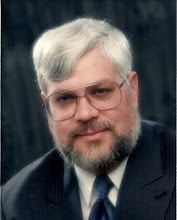
I am a former Presbyterian minister (and hence a holder of a Master of Divinity degree) and presently a technical writer for a Very Large Software Company (yes, you guessed right). My academic background is in things religious, but I have just enough interest in things scientific to support the delusion that I can write about them. In other words, I am a veritable salt shaker of dubious propositions.

Followers